
How to Choose an Atlanta Neighborhood Before You Move
Moving here and buried in browser tabs? Four simple lenses turn the whole metro into a short list you can visit.
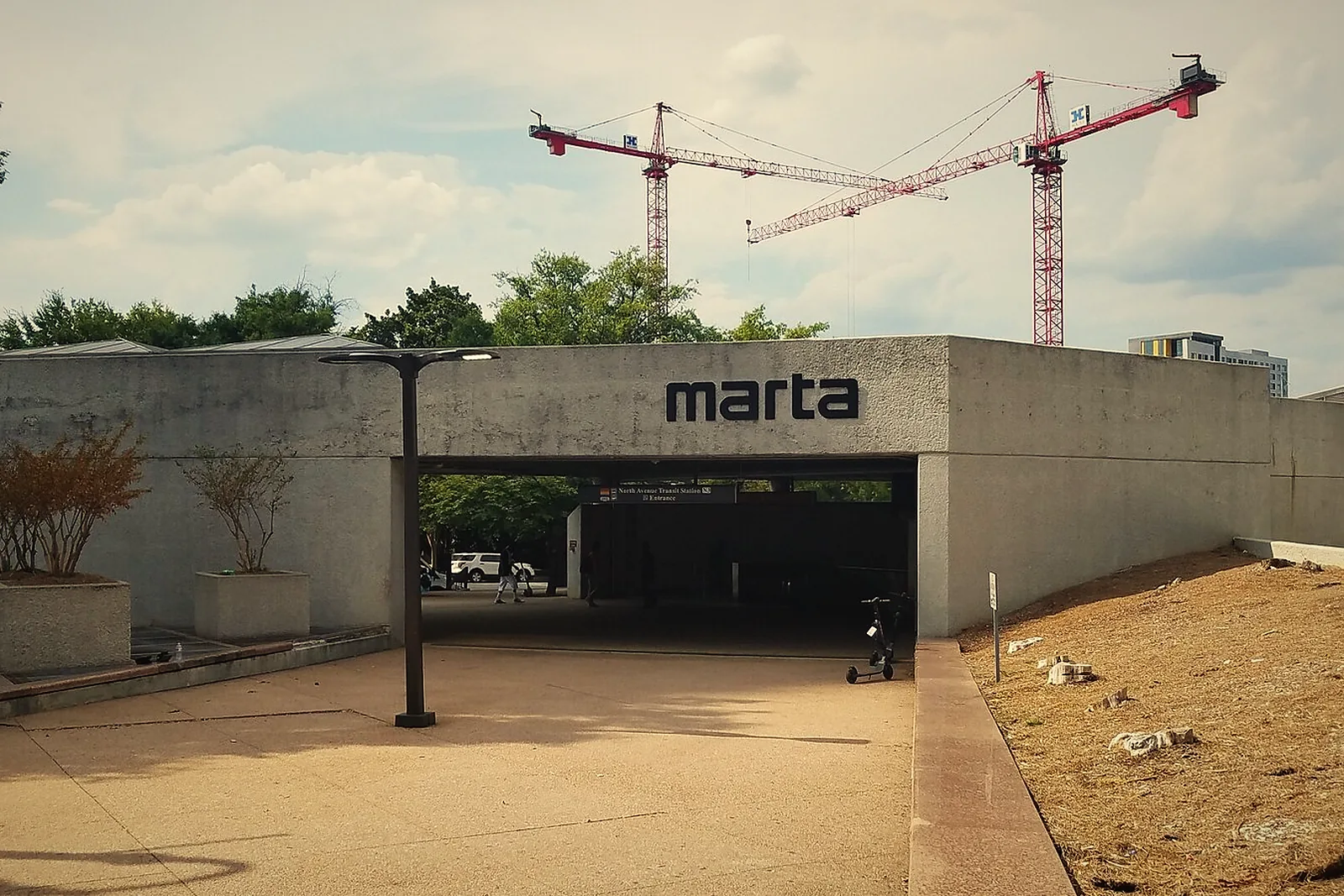
The entrance to MARTA’s North Avenue station in Midtown. Photo: JJonahJackalope, via Wikimedia Commons (CC BY-SA 4.0), color adjusted.
Picture it. You’ve got the new job offer, the moving date is circled on the calendar, and you’ve got 15 browser tabs open: Midtown lofts, Decatur bungalows, a townhome in Johns Creek. Every one of them looks good, and none of them tells you where you’d actually be happy.
That’s the moment we hear about most from people moving here: “How do I pick a neighborhood in a city I barely know?” The friend-to-friend answer: you don’t need to know the whole city. You need a short list that matches your real week.
How to choose a neighborhood in Atlanta comes down to four lenses: where you’ll go most days, how you want to get around, your all-in monthly budget and how the area may change. Start there, narrow it to two or three areas, then visit each at the times you’d really live there.
Why is choosing a neighborhood in Atlanta so hard?
Because “Atlanta” covers a lot of ground. It can mean a downtown loft near Five Points, a bungalow inside the city limits or a townhome in a suburb that’s its own city, with its own taxes and services.
Prices swing a lot, too. For the three months ending September 2026, Redfin put the City of Atlanta’s median sale price at about $425,000, downtown Atlanta’s at about $260,000 and Alpharetta’s at about $750,000. Same metro, very different budgets.
The way forward: stop trying to learn the whole map. Use a few simple lenses to cut it down.
How do I choose the right neighborhood in Atlanta?
1. Where will you go most days?
Write down the places you’ll go every week: work, the gym, the grocery store, the airport, the people you’ll visit. Then look at where they cluster.

If most of your week is downtown or in Midtown, living close by can save you hours. If your office is up GA 400, the northern suburbs may make more sense. Traffic on I-285, I-75, I-85 and GA 400 can be slow at rush hour, so time saved on the commute is time back in your evening.
2. How do you want to get around?
Atlanta is mostly car-first, but not everywhere.
- Walk or ride MARTA: Downtown, Midtown, Decatur and College Park all have MARTA rail stations.
- Bike or walk the BeltLine: The neighborhoods along the trail loop work well if you want to get around on foot.
- Drive, with a walkable center nearby: Suburbs like Johns Creek, Alpharetta and Peachtree Corners have built town centers where you can park once and walk.
The trail map is changing fast, too. In June 2026, the Atlanta Beltline joined its east and west sides into nearly 17 continuous miles of trail, according to the Beltline. In Buckhead, nearly 5 miles of the PATH400 greenway along GA 400 are open, connecting four MARTA stations, Livable Buckhead’s director wrote for Buckhead.com. And the PATH Foundation’s 19-mile Stone Mountain Trail runs through Decatur. If walking or biking matters to you, ask how close each home sits to the nearest trail entrance, not just the nearest highway ramp. We can map it for you.
3. What’s your all-in monthly budget?
Not just the price. Your monthly number includes taxes, insurance, mortgage insurance if you put less than 20% down and HOA dues. Many suburban neighborhoods have HOAs, and downtown condos and lofts usually do.
4. How might the area change?
New projects can shape how a neighborhood feels and what it’s worth over time. Downtown has Centennial Yards. Johns Creek just opened its Medley downtown on October 29, 2026, the AJC reported. Look at what’s planned nearby, and treat plans as possible upside you can enjoy if they arrive.
A worked Atlanta example
Say you’re relocating for a job near the GA 400 corridor, with a budget around $650,000 to $700,000, and you want a walkable spot for dinner.
Here’s how the lenses narrow it down, using Redfin medians for the three months ending September 2026:
| Area | Median sale price | Median days on market | Fits the lenses because |
|---|---|---|---|
| Johns Creek | $670,000 | 38 | Near GA 400, with the new Medley downtown |
| Sandy Springs | $650,000 | 48 | Near GA 400, with City Springs |
| Alpharetta | $750,000 | 50 | Near GA 400, with Alpharetta City Center, but above budget at the median |
Now you have a short list of two, maybe three. Johns Creek homes moved faster, at about 38 days, so you’d want to be pre-approved before your visit. Sandy Springs gave buyers a little more time.
Our Johns Creek and Alpharetta guide covers that side of town in detail.
Now say instead your job is downtown and you’d rather skip the car. Downtown’s median was about $260,000 and Midtown’s about $339,000, both with MARTA close by. Our Downtown vs. Midtown guide compares the two.
Where do people moving to Atlanta get tripped up?
Picking from photos alone. A listing can look perfect online and feel different on the street. The fix: visit at the hours you’d actually live there, a weekday evening and a weekend morning.
Testing the commute at the wrong time. A 20-minute drive at noon can be much longer at 5:30 p.m. The fix: drive it at rush hour, at least once.
Forgetting city lines. Many suburbs are separate cities with different taxes and services. The fix: confirm which city and county a home is in before you fall for it.
Checking schools in the wrong place. School assignments are set by each district and can change. The fix: confirm with the district directly for the exact address.
How do I plan a neighborhood scouting trip?
- Before the trip: narrow to two or three areas. Our quiz that matches neighborhoods to your routine is a quick way to start.
- Day one: drive your commute at rush hour, then have dinner in your top area.
- Day two: walk each area in the morning. Get coffee, find the grocery store, sit in a park.
- Day three: tour homes in your favorite area.
If you can’t visit in person, we can tour virtually and share what we see on the street. Our moving-to-Atlanta relocation services explain how it works.

Questions people ask
Two or three is plenty for most people. More than that, and they start to blur together.
It depends on your commute and how you want to get around. Inside the city, more areas are walkable or near MARTA. Outside, many suburbs offer more space and newer town centers.
Yes. Many buyers tour virtually and visit once or twice in person. It helps to have an agent on the ground.
Our complete guide to Atlanta’s neighborhoods puts them side by side.
What this means for you
You don’t have to learn all of Atlanta before you move. Four lenses (your daily places, how you get around, your monthly budget and what’s coming nearby) can turn dozens of options into a short list you can actually visit. Picking an area with good access and growing amenities could also help your home hold its value over time.
If this decision has been sitting on your kitchen table, reach out to Julian at Ju Sells ATL to talk through your move, your numbers and your timeline, no pressure.
Keep reading more from the Journal
Atlanta, In Real Life
Living in Peachtree Corners GA: A Walkable Town Green, a Real-Life Tech Lab and Gwinnett Prices
A walkable Town Green, a bridge to The Forum and a real-life tech lab. Here's what living in Peachtree Corners is like.
Atlanta, In Real Life
Buckhead or Sandy Springs? How to Get the Most Home for Your Money North of Midtown
Buckhead Village or City Springs? How to get the most home for your money north of Midtown, with real prices for both.
Around Georgia
Best Places to Live in Georgia Outside of Atlanta: Six Towns Worth a Weekend Visit
Six Georgia towns worth a weekend visit, with drive times, median prices and what's new in each.
The Journal
Every story, in one place
Neighborhood guides, Ask Ju answers and building spotlights.
Sources and fact checks (11)
- Redfin: Atlanta housing market (checked Oct. 30, 2026): www.redfin.com
- Redfin: Downtown Atlanta housing market (checked Oct. 30, 2026): www.redfin.com
- Redfin: Midtown Atlanta housing market (checked Oct. 30, 2026): www.redfin.com
- Redfin: Alpharetta housing market (checked Oct. 30, 2026): www.redfin.com
- Redfin: Johns Creek housing market (checked Oct. 30, 2026): www.redfin.com
- Redfin: Sandy Springs housing market (checked Oct. 30, 2026): www.redfin.com
- AJC: Johns Creek’s Medley project opens, ushering new era for Atlanta suburb (Oct. 29, 2026): www.ajc.com
- MARTA: Train stations and schedules: itsmarta.com
- Atlanta Beltline: Atlanta Beltline opens final piece of trail ahead of FIFA, connecting east and west (June 12, 2026): beltline.org
- Buckhead.com: Local Voice, Denise Starling on PATH400 coming full circle (2026): www.buckhead.com
- PATH Foundation: Stone Mountain Trail: www.pathfoundation.org
Every figure was checked on the live source page in October 2026. Hero photo: The entrance to MARTA’s North Avenue station in Midtown. Photo: JJonahJackalope, via Wikimedia Commons (CC BY-SA 4.0), color adjusted.